At the end of the month we will release the first book from Sound Archive Books: Abigail.
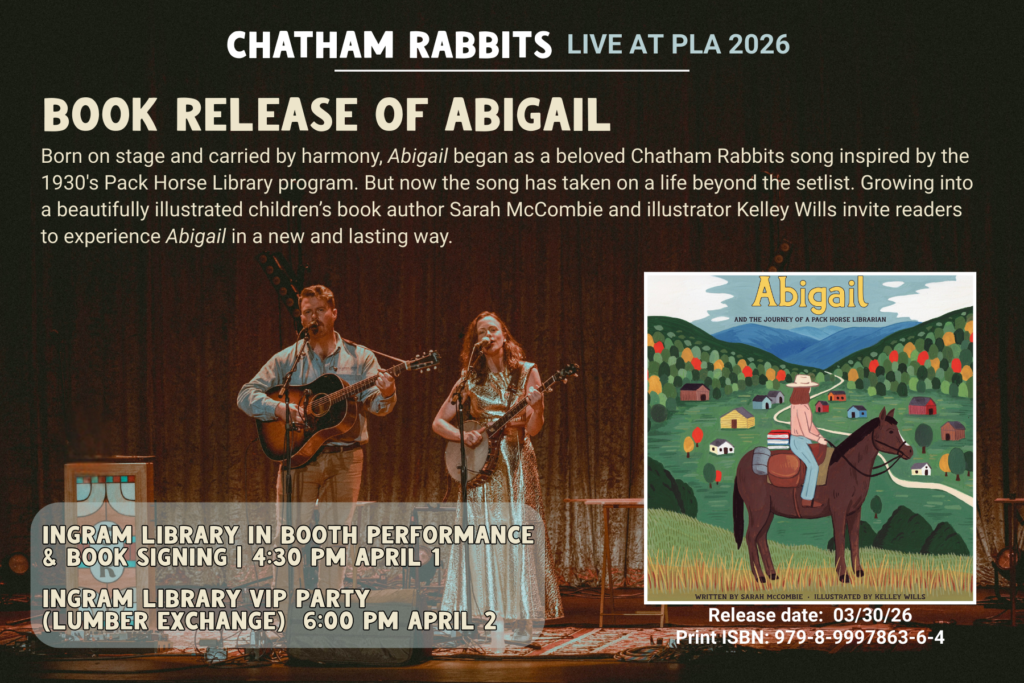
The book will debut at the Public Library Association Conference, where Chatham Rabbits will perform two live sessions connected to the release — April 1 at 4:30 PM at the Ingram Library Booth (also includes a book signing), and April 2 at 6 PM at the Ingram Library VIP party. If you will be at PLA, please come say hello and meet the author Sarah McCombie and her husband Austin. After five years away I am excited to re-connect.
Abigail began as a song written by Sarah and performed alongside her husband Austin as the Chatham Rabbits played on stages across North America. It became a story. Now it is a beautifully produced children’s book created in collaboration with artist Kelley Wills. In all my years working in publishing, I have never quite seen anything like this book.
The artwork by Kelley Wills of Brainflower Design stands on its own (and literally will stand on its own through a series of art shows later this year to find homes for the incredible paintings in the book). Kelley’s work — both commercial and otherwise — deserves a blog post (and a book) of its own.
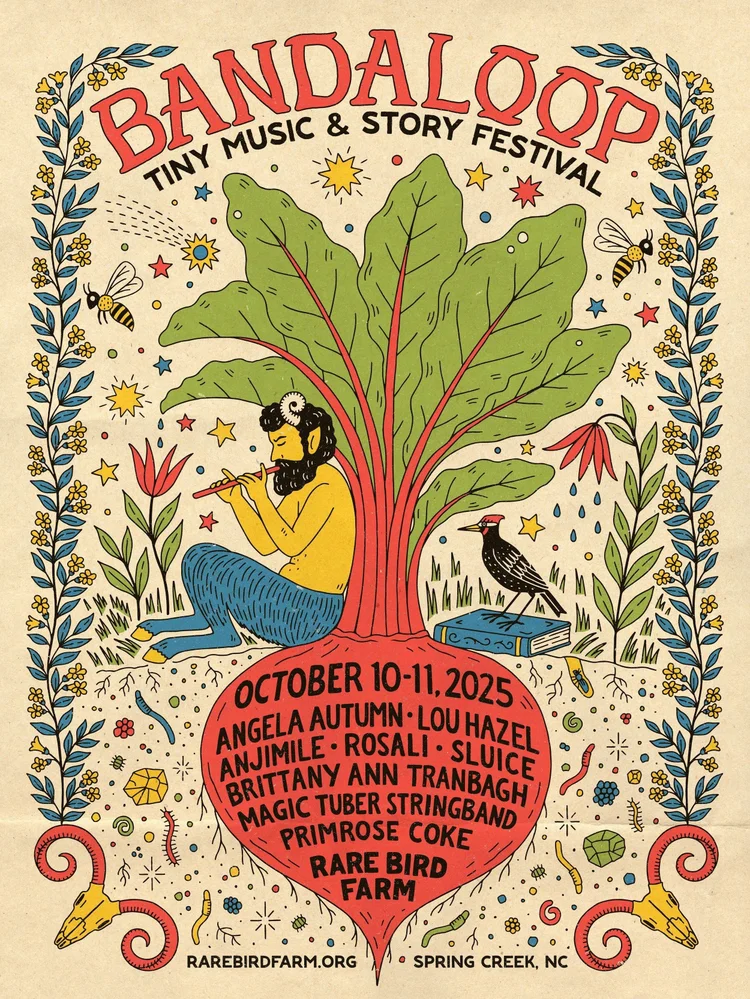
Of course I am also a bit prejudiced in that we met through the incredible work Kelley has done for us at Rare Bird Farm over the past few years (including this rad poster for our Tom Robbins inspired Bandaloop Tiny Music & Story Festival this past year).
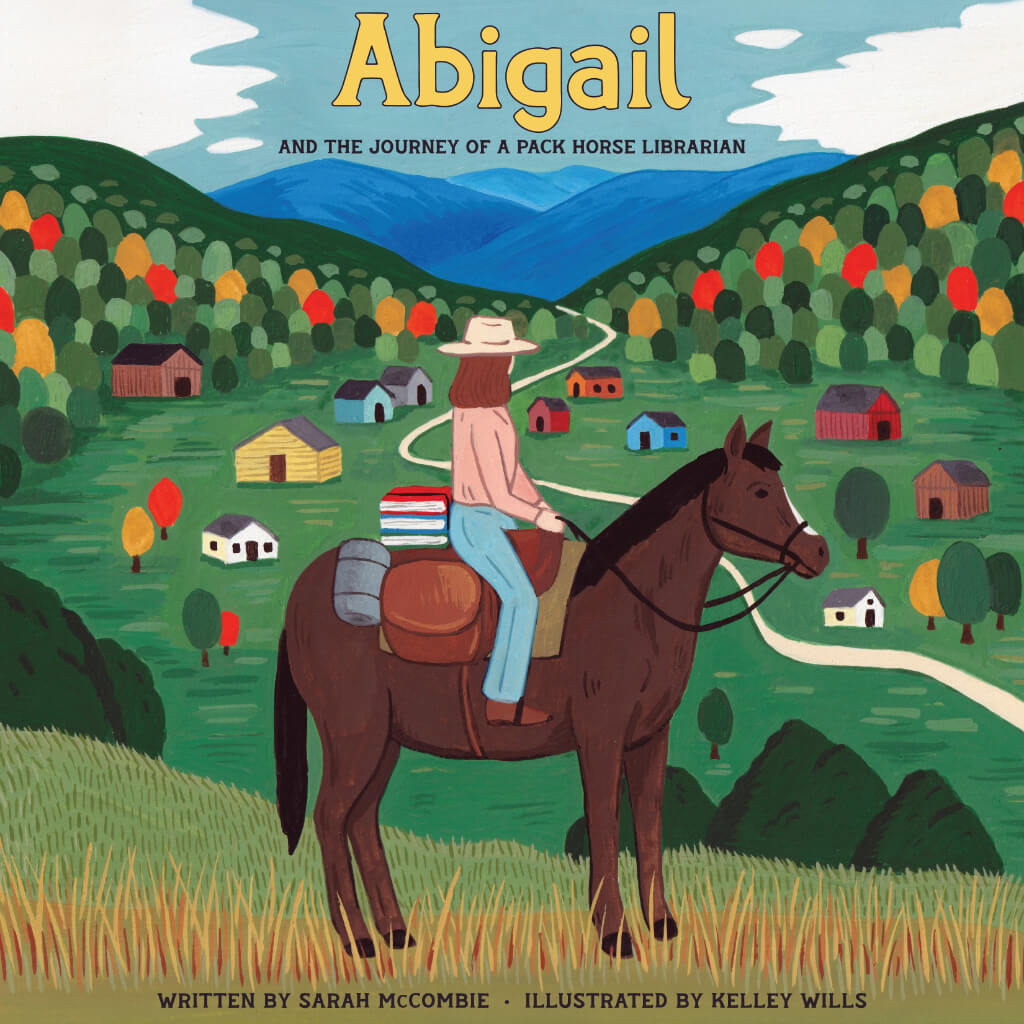
Abigail the book
What happens when her visual world meets Sarah’s song is something special. The chemistry between the two artists is palpable. And the book does something more.
There’s something fitting about a book like Abigail being born into the world and finding its home in libraries. Nearly a century ago, the Pack Horse Librarians of Appalachia carried books by horseback into remote mountain communities, often traveling miles along narrow trails to reach families who otherwise had little access to reading material. They understood something simple and profound: that books open doors. They introduce new ideas, new places, and new ways of thinking. In its own small way, Abigail carries that same spirit forward — a book rooted in music and imagination, arriving in libraries where it can spark curiosity and send young readers off exploring worlds beyond its pages.
At the back of the book is an appendix that parents, educators, and librarians will find fascinating for its simplicity and effectiveness. Rather than ending when the story ends, the book quietly opens a door. It invites children to step beyond the pages and explore the ideas, places, and curiosities that live behind the story. It’s a simple concept, but it turns the book into a starting point rather than a destination.
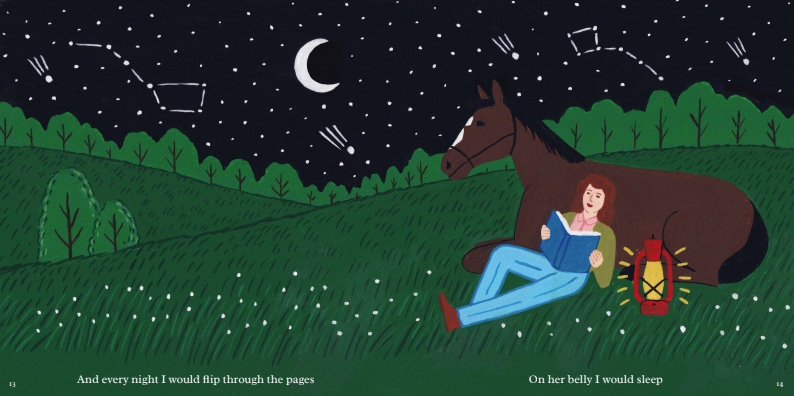
That quality — the ability of books to open new worlds — is one of the reasons libraries have always mattered so much to me.
I can point to a handful of moments in my life when the direction of things changed, when I caught wind in my sails at a low point. A surprising number of those moments happened in a library, often by accident, picking up a random book that introduced me to an entirely new way of thinking. Rupert Sheldrake, Douglas Coupland, and Bertrand Russell all entered my life that way.
Books have a quiet ability to do that. They connect you to people you’ve never met, ideas you’ve never encountered, and places you’ve never been — sometimes from another time, another era, or another world completely.
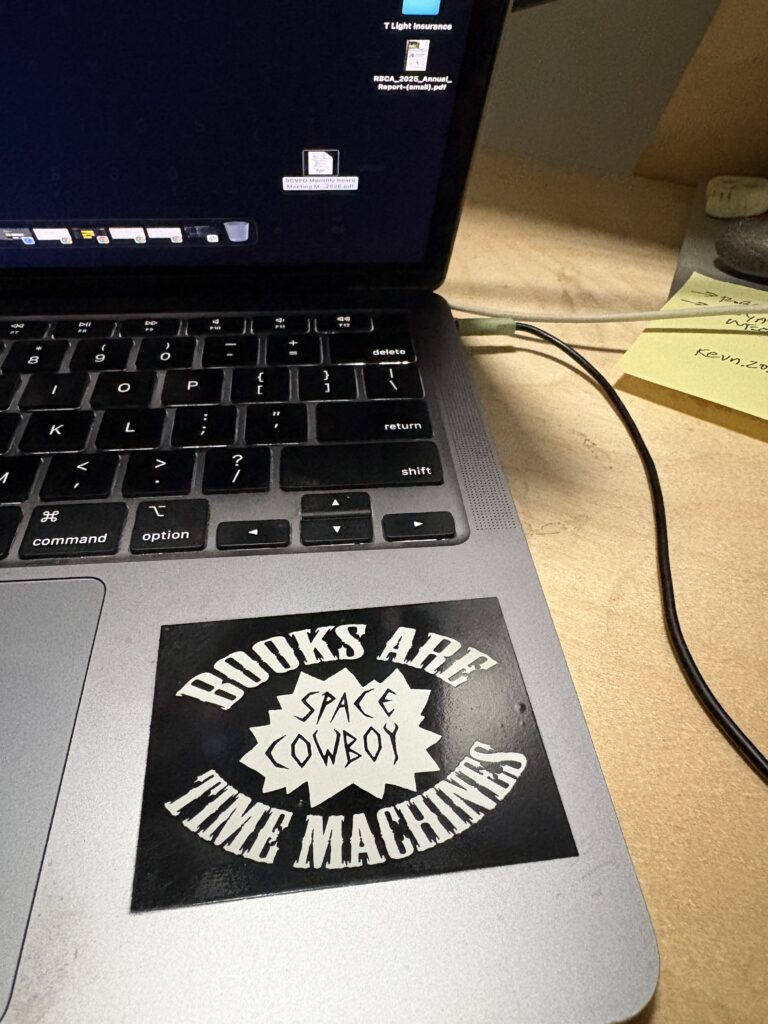
I have a sticker on my laptop from the Space Cowboy bookstore in Joshua Tree that says it simply: “Books Are Time Machines.”
In that sense, Abigail feels like a fitting first book for this project.
Over the past year, through the Appalachian Memory Project, we’ve been working with communities in Western North Carolina to record oral histories, gather photographs, and document local culture. One thing that kept appearing in those conversations was music. Songs carry memory in ways that few other things can. Sound Archive Books grew out of that realization — the idea that the stories around music deserve the same care and permanence we give to other parts of cultural history.
Like most work of this kind, the Sound Archives Book project will never really be finished. One of the principles that makes it possible is accepting that the work will always be incomplete and imperfect. The books themselves will be as close to perfect as we can make them. But the larger work of gathering stories, memories, and music will never be done. There is simply too much to tell.